
The Duty Layering System: How to Dress for a 12-Hour Shift
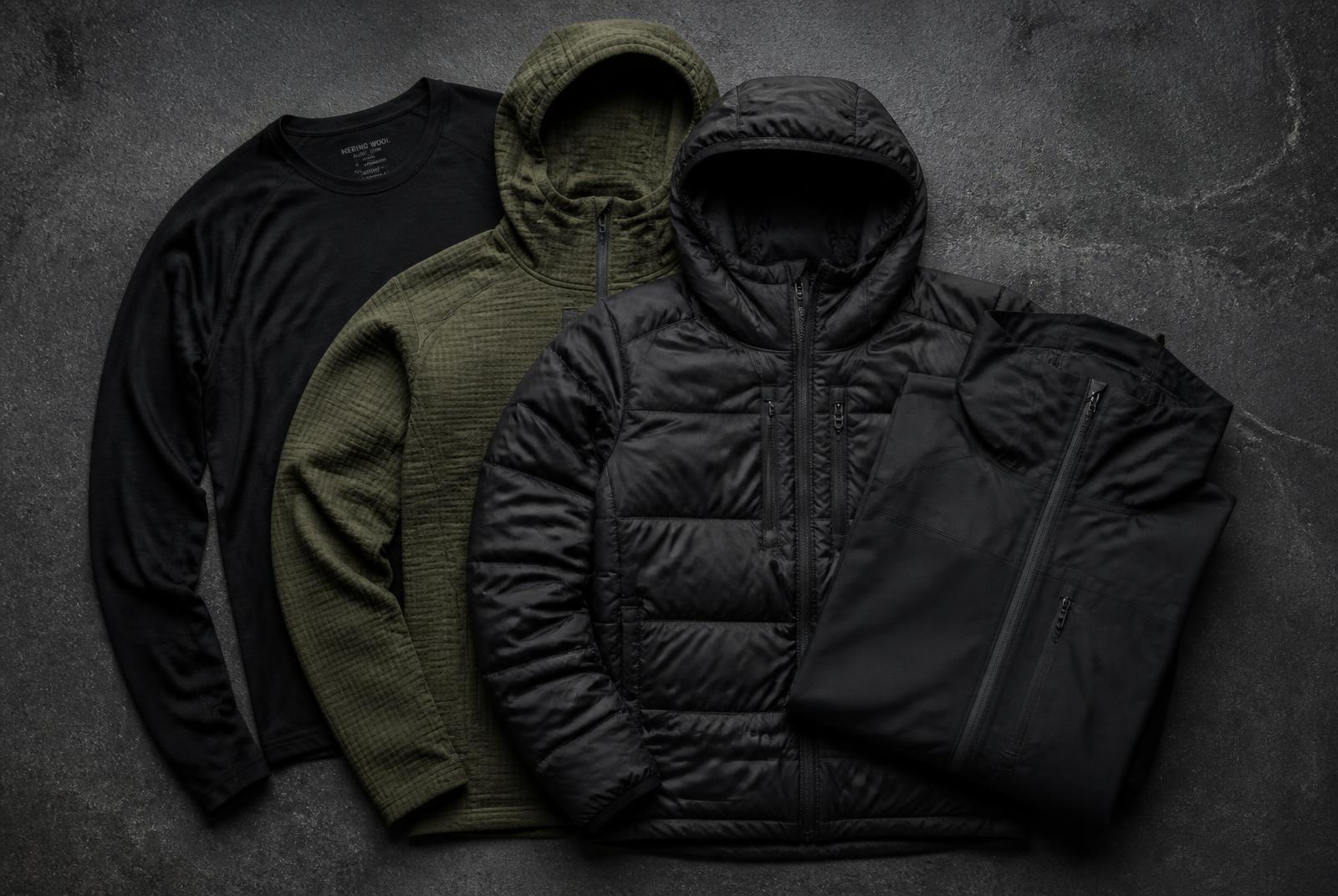
Cold is rarely what ends a shift early. Sweat is. A layering system that traps moisture against the skin will chill a static operator faster than an air temperature drop of twenty degrees, and the fix is almost never "more jacket." It is a deliberate stack of four layers, each doing exactly one job.
Layer 1 — Base: move moisture, add nothing
The base layer's only job is to pull sweat off the skin and pass it outward. Merino blends resist odor over multi-day deployments; synthetics dry faster and cost less. Both beat cotton, which holds water and stops working the moment you sweat through it. Fit is snug, not compressive, and flame-resistant base layers are mandatory for anyone working around vehicles, breaching charges, or fuel.
Layer 2 — Mid: regulate, don't insulate
A grid-fleece or light hoody worn directly under a plate carrier is the layer you will live in. It should breathe hard, dry fast, and have no bulky seams under the plate bag. This is the layer to size correctly: anything that bunches under armor will create a hot spot within an hour of patrol.
Layer 3 — Insulation: for when you stop moving
Static posts, overwatch, vehicle time, and casualty care all mean zero heat generation. Carry a synthetic-fill puffy rather than down whenever moisture is possible — synthetic keeps loft when damp, down collapses. This layer lives in the pack until it is needed and goes on over everything, including armor, when you go static.
Layer 4 — Shell: the weather barrier
A hardshell handles sustained rain and hard wind; a softshell handles wind, spindrift, and abrasion while breathing far better. Most professionals carry a packable hardshell and wear a softshell. Our softshell vs. hardshell breakdown covers the membrane trade-offs in detail.
Getting the fit right under armor
- Size the shell to fit over a plate carrier if you will wear it over armor — not to fit your shoulders bare.
- Check that shell pockets clear the carrier's cummerbund; chest and bicep pockets stay usable, hand-warmer pockets usually do not.
- Test the hood over a helmet before the shift, not during one.
- Cuffs and hem adjusters matter more than fabric weight for heat dumping.
Cold-wet vs. cold-dry
Cold-wet conditions (35–50°F, rain) punish anyone who over-insulates: run a thin base, a grid mid, and a hardshell, and accept being slightly cold at the start of movement. Cold-dry conditions (below 20°F) allow a heavier mid and a synthetic puffy, with the shell used mainly as a windbreak.
Where Arc'teryx PRO fits
The Arc'teryx PRO line is built as a system rather than a catalog of jackets: base layers, the Naga and Atom mid-layers, and the Alpha and Cold WX outer garments are designed to stack without bunching, with sizing that anticipates armor underneath. Deliberate Dynamics is an authorized Arc'teryx PRO dealer, and every product page publishes fabric, weight, and layering position so you can build the stack instead of guessing at it.
Unsure where to start? Talk to a gear specialist or, for unit-level standardization, request an agency quote.